
Does Duplicate Content Hurt SEO and AI Search Visibility?
Duplicate content has been a concern in search marketing for years, and the rise of AI-powered search experiences has made the topic even more important. Brands now need content that can rank in traditional search results, be selected for summaries and answer engines, and still provide a strong on-page experience for readers. That raises a practical question: does duplicate content directly hurt visibility, or is the real issue how search systems interpret repeated pages?
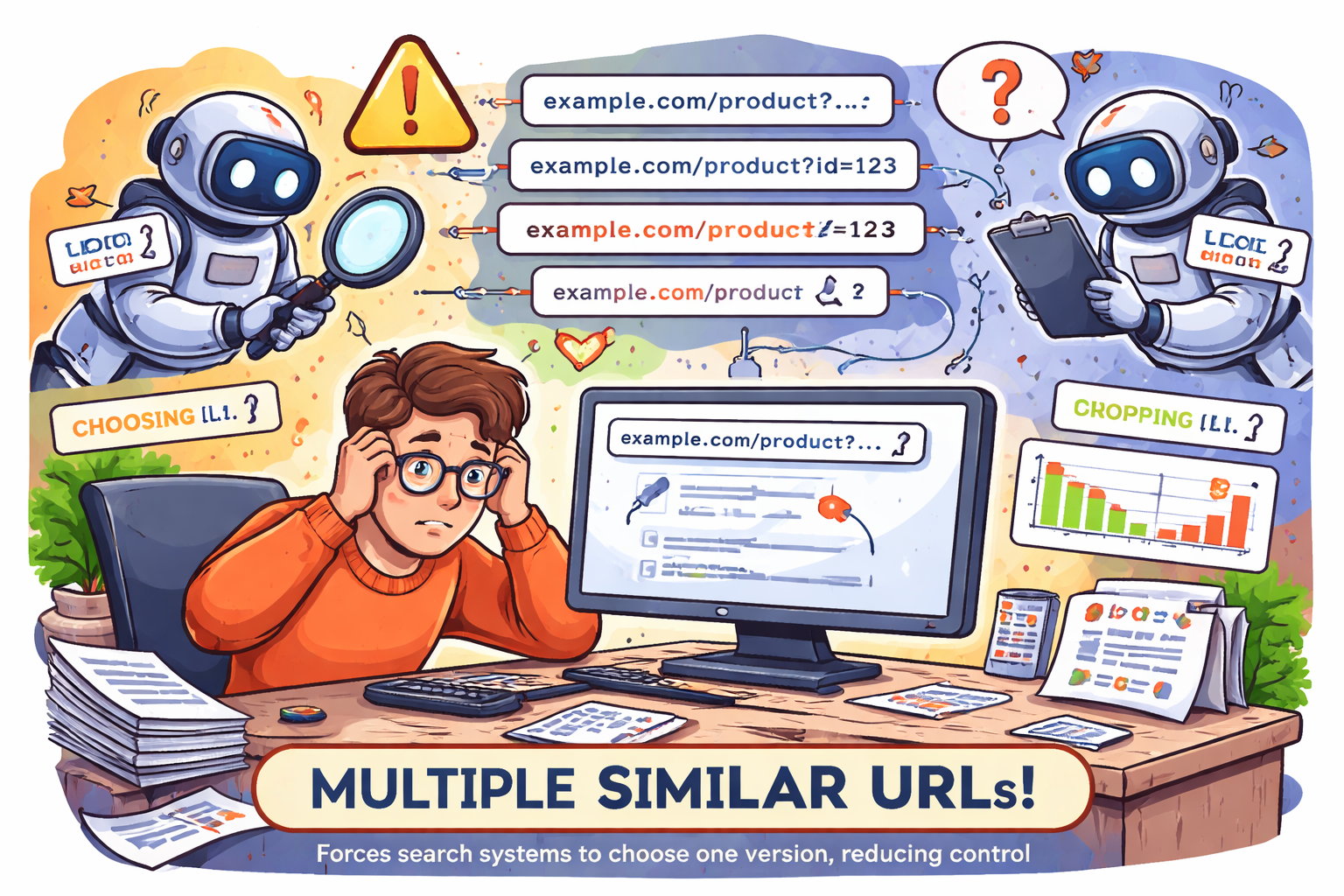
The short answer is that duplicate content does not usually trigger a manual penalty by itself, but it can absolutely weaken performance. When multiple URLs contain the same or very similar material, search engines may struggle to determine which version should be indexed, ranked, or cited. That confusion can dilute link equity, waste crawl budget, split relevance signals, and reduce the likelihood that your preferred page is the one surfaced in search or AI-generated answers.
What Counts as Duplicate Content?
Duplicate content refers to substantive blocks of content that appear in more than one location on the web. Sometimes that duplication exists on the same website, and sometimes it appears across different domains. It can be exact duplication, such as identical product descriptions copied across category and filter URLs, or near duplication, such as location pages where only a city name changes while the rest of the copy remains essentially the same.
Common examples include printer-friendly pages, HTTP and HTTPS versions of the same URL, pages available with and without trailing slashes, parameter-based URLs created by sorting and filtering, syndicated articles, reused manufacturer descriptions, and boilerplate-heavy template pages. In many cases, duplication is accidental and caused by CMS behavior, faceted navigation, or weak content production processes rather than intentional copying.
Does Duplicate Content Cause a Google Penalty?
In most cases, no. Duplicate content is not the same thing as spam. Search engines generally try to cluster similar pages and choose one representative version to show. The real problem is not an automatic punishment but a loss of control. If several URLs compete with each other, the wrong page may rank, an important page may be ignored, or none of the versions may perform as well as a consolidated original page would have.
That said, duplication becomes risky when it is part of a manipulative strategy. Large-scale copied pages created only to capture search traffic, doorway pages, or scraped content with little added value can create quality issues. In those situations, the problem is not merely duplication. It is low originality, low usefulness, and an attempt to scale visibility without creating distinct value for users.
Why Duplicate Content Can Hurt SEO Performance
Even without a formal penalty, duplicate content can undermine organic performance in several ways. First, it splits ranking signals. If external links point to different versions of the same page, authority is divided instead of concentrated. Second, it confuses indexing. Search engines may spend time crawling duplicate URLs while missing fresher or more important pages. Third, it weakens relevance targeting because multiple pages may compete for the same query intent. This can lead to keyword cannibalization and unstable rankings.
Duplicate content also affects reporting and optimization. Teams may see impressions and clicks spread across multiple URLs, making it harder to diagnose performance and improve the right page. On ecommerce sites, duplicates often reduce the strength of category and product pages. On publishing sites, syndicated or republished articles may cause the original source to compete with copies, especially if technical signals are inconsistent.
For local SEO, duplication often appears when businesses create many city or service-area pages with nearly identical text. These pages may get indexed, but they rarely perform strongly unless each one contains genuinely local, unique, and useful information. Thin variation is usually not enough.
How Duplicate Content Affects AI Search Visibility
AI search visibility depends on many of the same signals that shape traditional SEO: clarity, authority, originality, and consistency. If your content appears in many versions across your own site or across third-party domains, AI systems may have a harder time identifying the canonical source. That can reduce the chance that your preferred page is cited, summarized, or used as the primary source for an answer.
AI-driven search experiences tend to reward pages that are clearly structured, distinctive, and information-rich. If several pages say essentially the same thing, none of them stands out as especially useful. Repetition also makes it harder for retrieval systems to determine which page offers the most complete or current answer. In practice, original content with a clear point of view and strong supporting detail is more likely to earn visibility than generic, reused copy.
This matters for publishers, SaaS companies, ecommerce brands, and service businesses alike. If your buying guides, landing pages, product descriptions, or help articles are heavily reused, AI systems may prefer another source that presents the information more distinctly. The issue is not simply that content is duplicated. It is that duplicated content often fails to demonstrate unique value.
Common Causes of Duplicate Content
- URL variations caused by tracking parameters, sorting, filtering, or session IDs
- Separate versions of pages on HTTP and HTTPS or www and non-www subdomains
- CMS-generated archive, tag, and pagination pages with overlapping text
- Reused manufacturer or supplier descriptions on product pages
- Syndicated or cross-posted articles without clear canonical signals
- Location or service pages built from the same template with minimal changes
- Staging sites or test environments that are accidentally indexable
How to Fix Duplicate Content
The best fix depends on the source of the duplication, but the goal is usually the same: make it easy for search engines to understand which URL should represent the content. Start by identifying duplicates through site crawls, index coverage reports, and manual checks of parameterized or template-generated pages. Then decide whether each duplicate should be consolidated, redirected, canonicalized, or blocked from indexing.
- Use rel=canonical tags to indicate the preferred version when similar pages must exist.
- Apply 301 redirects when duplicate URLs no longer need to remain accessible.
- Keep internal linking consistent so the preferred URL receives the strongest signals.
- Prevent accidental indexation of staging pages, filter combinations, and low-value archives.
- Write unique title tags, headings, and body copy for pages that target different intents.
- For syndicated content, ensure attribution and canonical arrangements are clear when possible.
- Merge overlapping articles or landing pages when they serve the same purpose.
Not every similar page needs to be removed. Some websites legitimately require variant pages, such as ecommerce listings with product options or multilingual versions. The key is to create real differentiation where needed and consolidate where differentiation is weak.
Best Practices for SEO and AI Search
To improve both classic SEO and AI search visibility, focus on originality and signal clarity. Publish content that answers a specific intent better than competing pages. Add firsthand expertise, examples, comparisons, definitions, FAQs, and clear structure. Make sure the preferred URL is obvious through canonical tags, sitemaps, redirects, and internal links. When content is republished elsewhere, preserve source attribution and avoid creating uncertainty about where the original lives.
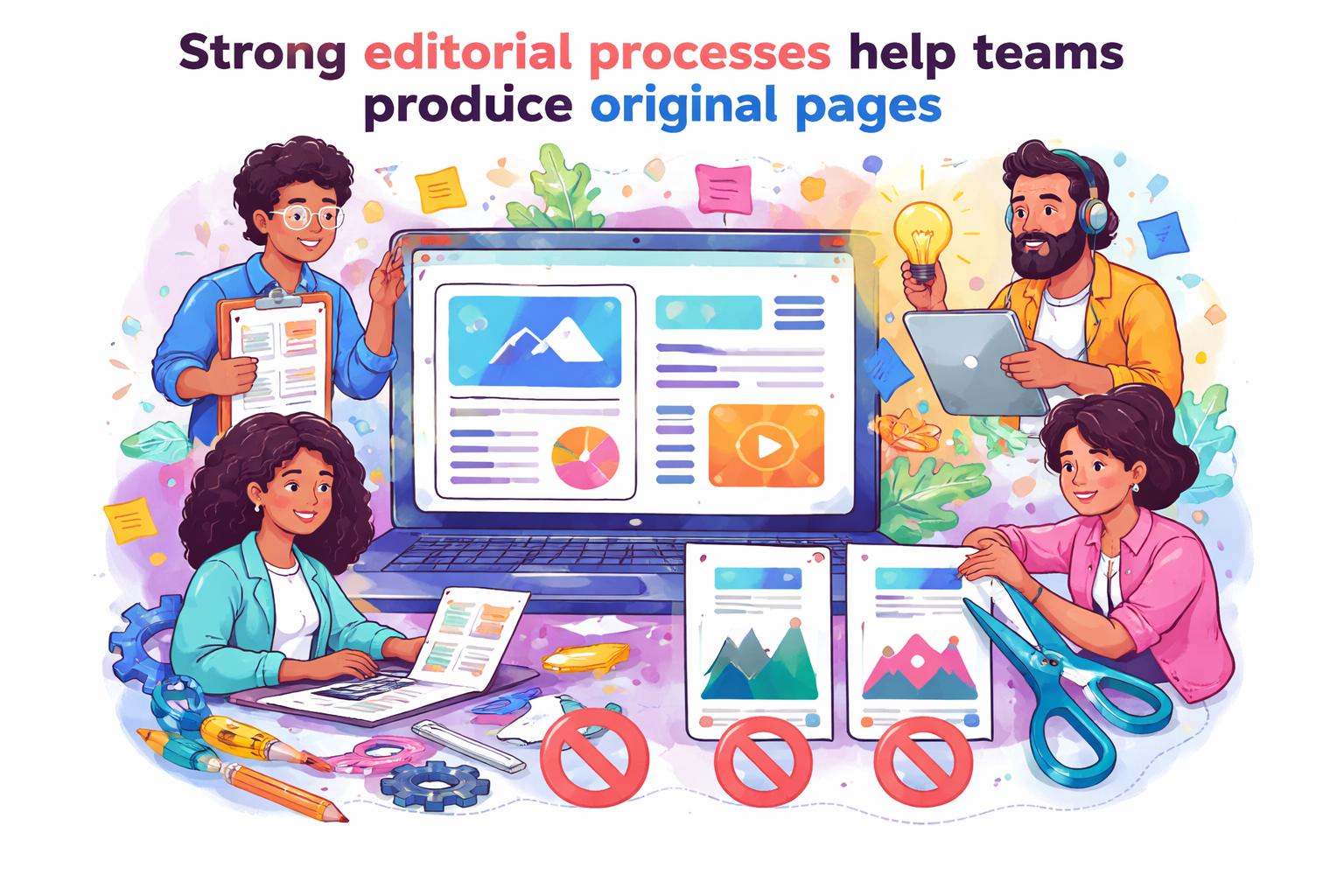
It is also wise to review large content sets regularly. Blog categories, faceted ecommerce pages, programmatic landing pages, and knowledge-base articles can drift into duplication over time. Periodic audits help protect crawl efficiency, preserve ranking signals, and improve the odds that AI systems identify your most authoritative page.
Final Answer
Yes, duplicate content can hurt SEO and AI search visibility, but usually not because of a direct penalty. It hurts by creating ambiguity. When search engines and AI systems cannot easily determine which page is original, authoritative, or most useful, your visibility suffers. The solution is to reduce unnecessary duplication, consolidate overlapping pages, and invest in content that is genuinely distinct. In search, originality is not just a quality signal. It is a visibility advantage.