
Build a Citation Hub: Hub-and-Spoke Internal Linking to Earn AI Answers (Practical 2026 Guide)
What Is a Citation Hub, and How Does the Hub-and-Spoke Internal-Linking Model Work?
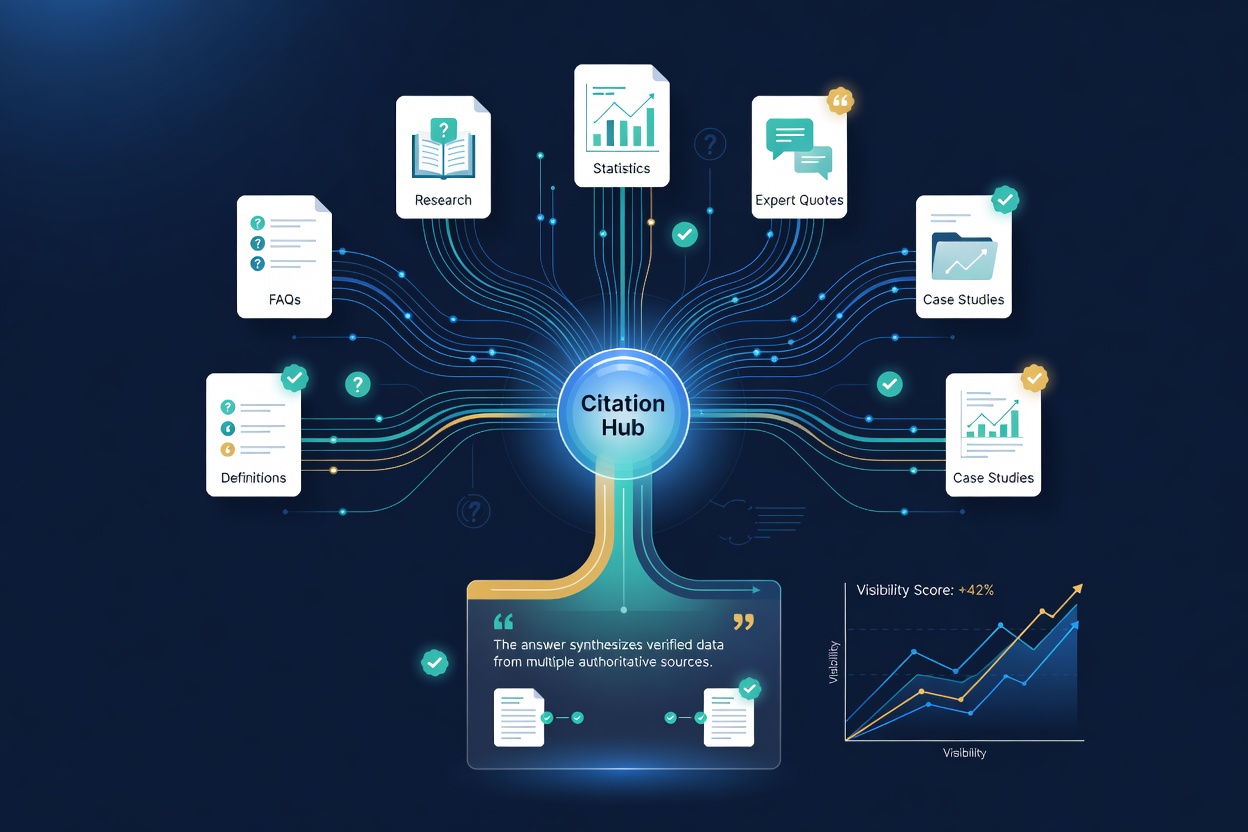
A citation hub is a central, authoritative page that explains a topic comprehensively and points to related spoke articles covering specific questions or subtopics. Each spoke links back to the hub, while relevant spokes link to one another when they share context. This creates a clear content foundation; for example, a startup can begin with a startup blog and SEO content workflow guide and build supporting articles around its key themes. The goal is not to add as many links as possible. Every link should help readers move from a broad explanation to a deeper answer, or return to the main resource for context. Unrelated links create noise, weaken topical organization, and make the page less useful to both readers and search systems.
- One central page that introduces the main topic and organizes the wider resource.
- Closely related spoke pages that explore specific subtopics in greater depth.
- Deliberate internal links connecting the central hub with each relevant spoke page.
- Consistent terminology across all pages to reinforce topical relationships and clarity.
- A clear reader journey that guides visitors from broad context to detailed answers.
Why Can Hub-and-Spoke Internal Linking Improve Content Discovery and Interpretation in Search and AI Answer Systems?
Strong internal linking clarifies the relationship between a hub page and its supporting articles, helping readers find deeper explanations and giving search crawlers clearer paths to supporting evidence. It can also consolidate authority around important pages and make key answers easier to discover. For AI-oriented search, a well-structured network of links may improve the clarity and discoverability of your content and help identify canonical sources, but it cannot guarantee that an AI system will include a page in its answer. For more on keeping signals clear, see Does Duplicate Content Hurt SEO and AI Search Visibility?.
How Do You Choose the Central Citation Hub and Supporting Spoke Topics?
Choose the hub around a broad topic that matters to your audience and connects clearly to your business, but narrow it enough to serve one identifiable search intent. Review existing content first: the hub should consolidate the main explanation, while spokes should fill meaningful gaps rather than repeat sections of it. Select spokes by mapping the narrower follow-up questions readers are likely to ask, such as how to implement a process, compare options, solve a specific problem, or evaluate results. Give each page a distinct primary question, audience need, and outcome; if two pages would satisfy the same query with nearly identical advice, combine them or reposition one around a genuinely different angle. A useful planning model is to define the hub’s purpose, supporting questions, content briefs, and internal-link requirements before production, as demonstrated in this practical guide to scaling SEO blog production without losing quality. Finally, check the completed set for topical coverage: the hub should establish the subject and link to the spokes, while each spoke should add depth and link back only where the broader context helps readers.
- Define the primary audience and document their needs, knowledge level, and key questions.
- Identify the hub’s central search intent and the main problem the content should solve.
- Inventory existing articles that could support the hub or serve as spoke content.
- Group related audience questions into clear topic clusters.
- Assign one distinct purpose and primary question to each spoke article.
- Compare the planned topic clusters with existing coverage to identify missing content and priority gaps.
How Do You Map Internal Links Across Hub and Spoke Articles?
Build the link map around clear user journeys. Link the citation hub to each important spoke so readers and search systems can discover the supporting pages, then link each spoke back to the hub to reinforce the main source. Connect spokes only when the relationship helps readers understand the topic or take a logical next step; avoid adding arbitrary or excessive links. Place every link in relevant surrounding context, point to the strongest and most complete version of the topic, and use descriptive anchor text that sets accurate expectations. To keep the structure consistent as the site grows, document link opportunities during planning, drafting, and review with an editorial workflow for startup blogs.
What Anchor Text and Link Placement Work Best for a Citation Hub?
Use anchor text that accurately describes the page a reader will reach, so people can decide whether the link is worth clicking before they select it. Vary the wording naturally instead of repeating the same exact-match keyword, and avoid vague phrases such as “click here” or “learn more” when a more specific description is possible. Place each link near the explanation it supports—for example, when discussing how one workspace can consolidate marketing tools, link the phrase AI content hub directly to that relevant article. This contextual approach helps readers, search engines, and AI systems understand why the destination matters.
- Confirm the destination directly expands on the surrounding topic.
- Use descriptive anchor text that clearly signals what the reader will find.
- Check that the URL works and leads to the intended page.
- Place the link where it naturally supports the surrounding explanation.
- Remove redundant links to the same destination within the section.
- Verify that the link helps answer the reader’s likely next question.
How Do You Measure Whether a Citation Hub and Its Internal Links Are Working?
Monitor the hub from several angles rather than relying on one proof point. Track crawl and index coverage, impressions and clicks, rankings by search intent, clicks on internal links, engagement with the pages those links lead to, and conversions such as enquiries, sign-ups, or sales. Also check whether important pages are receiving useful, contextually relevant links—not just a high volume of links. These SEO and user-behaviour signals can show that the structure is improving discoverability and usability, but no single metric can prove that an AI system will cite your content. Evaluate visibility, user experience, and business outcomes together, then review the data periodically and refine the hub as your content, priorities, and search results change.
How Often Should You Update a Citation Hub and Its Spoke Articles?
Update a citation hub when the topic changes—not simply when a calendar reminder arrives. Review it after major product or policy changes, shifts in search intent, declining performance, broken or redirected links, or evidence that an answer no longer reflects current guidance. During each review, audit internal links, check for overlapping pages, refresh outdated answers, and consolidate competing pages when one stronger resource can serve the same intent. Document significant changes so contributors can understand what was updated, why it changed, and which supporting pages were affected. The practical takeaway: a citation hub is a maintained information system, not a one-time link-building exercise.